THE SHORT ANSWER
Compare fiberglass, concrete and vinyl liner pools using layout, installation, maintenance and warranty checks before asking builders for matching quotes.
Which pool material should you shortlist?
Shortlist fiberglass when an available manufactured shell fits the pool you want; investigate concrete when the proposed shape needs a site-built design; and compare vinyl liner when its specified wall-and-liner system meets your layout and ownership plans. The deciding evidence is a buildable proposal and a care commitment you can support. There is no material that wins every yard. Begin with the same desired swim area, entry, seating and surrounding deck for all three proposals. A shallow lounging feature in one drawing and a longer swimming area in another are different products, even if the water surface areas look similar. First decide which arrangement meets the household's purpose. Then ask builders to show how the material changes that arrangement. Treat a material recommendation as a question to investigate rather than permission to skip local site assessment.
Know what each proposal actually describes
Fiberglass pools use a pre-engineered shell; vinyl liner proposals combine the liner with the supporting pool system; concrete pools are constructed on site. Latham's comparison describes different design options across the three categories. Latham sells fiberglass and vinyl products, so its comparison has a commercial perspective. Use it to identify questions and obtain the exact documents for the products offered. Gunite is not a separate fourth pool material. The American Shotcrete Association explains that shotcrete includes wet- and dry-mix sprayed concrete or mortar, while gunite refers to the dry-mix process. Ask a concrete builder to identify the proposed construction method and finish. This explanation is terminology, not a structural specification or a reason to supervise the application yourself. Qualified design and construction professionals must evaluate the actual project.
Use three gates before ranking the options
Compare feasible options before scoring preferences. An attractive choice with unresolved delivery, design or service questions is not equivalent to a fully scoped proposal. The three gates below make the missing information visible. Mark each gate confirmed, unresolved or unsuitable, and keep the supporting drawing or document with the answer. Apply the gates to an actual proposed product and builder rather than an entire category. One shell model failing a fit test does not eliminate every fiberglass pool. One unclear concrete proposal does not establish that concrete is unsuitable. Ask for a defined revision or a different option before drawing a broader conclusion.
- Layout gate: Does the specified pool provide the swimming, entry and seating arrangement you agreed, with the deck and access routes shown?
- Delivery and construction gate: Has the builder assessed the proposed route and site, identified the work required, and assigned responsibility for resolving the unknowns?
- Ownership gate: Do you have the applicable care instructions, warranty documents and a realistic local service arrangement? A marketing promise alone leaves this unresolved.
Fiberglass: start with the exact shell, not the photograph
A fiberglass comparison becomes useful when it names the shell model and shows it in the whole-yard plan. Request the current dimensioned drawing, entry and seating details, proposed finish and the builder's installation scope. Test whether the model serves your daily use before spending time on decorative choices. This is a reasonable candidate to investigate when you can find a model that meets the agreed brief. Reconsider that model if you need a layout change the supplier cannot provide, or if installation and delivery remain unresolved. Do not assume a stock photograph proves that the pictured arrangement is available or suitable at your property. Ask the installing builder who assesses access, any lifting arrangement and the work needed to leave the yard usable. A shell delivery date is only one event in a project that also needs utilities, surrounding work and relevant approvals. Get a project schedule for the complete scope, not a promise based only on placing the shell.
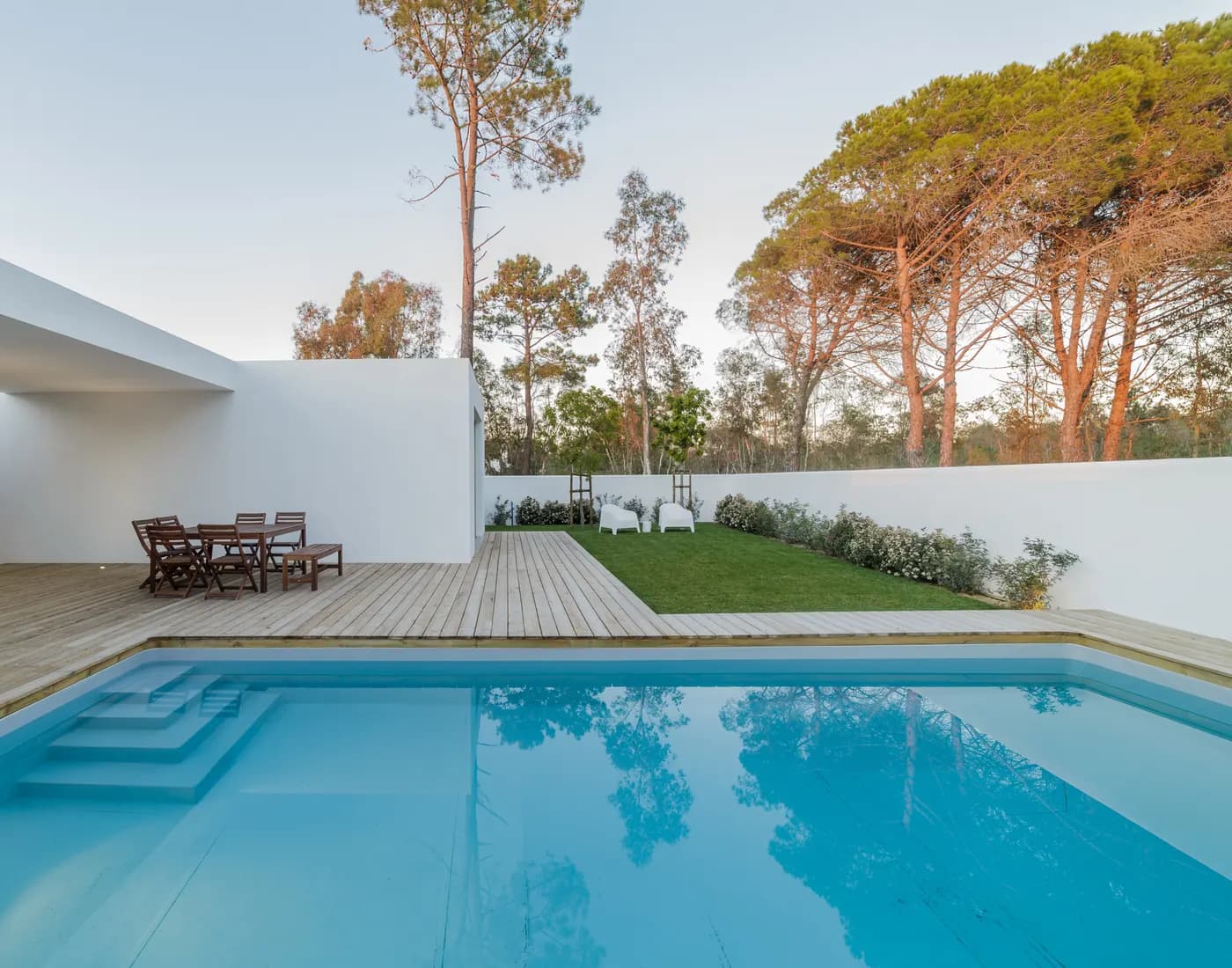
Illustrative design context. Not a construction specification or a documented Yardelia project.
Concrete: identify the design flexibility you would actually use
Concrete is worth investigating when a site-built proposal addresses a specific requirement that the alternatives do not meet. Ask the designer to show that requirement on the plan: the intended geometry, an entry arrangement or how the water and surrounding space relate. A preference for customization is more useful when it names something you would otherwise have to give up. Keep the shell, interior finish and construction service as separate parts of the comparison. Ask who supplies and installs each, what startup instructions apply, and which warranty covers which work. More options also mean more decisions to specify before a bid can be comparable. If an available alternative already meets your brief, compare the complete concrete proposal against it rather than assuming that a custom design automatically improves daily use. Ask the builder to explain each difference you are paying for. Leave engineering, drainage, soil and structural decisions with the appropriately qualified professionals; this comparison does not prescribe a concrete mix, reinforcement or construction sequence.
Vinyl liner: compare the complete system and a future service visit
A vinyl liner pool comparison needs more than a liner pattern. Identify the proposed walls, liner product, steps, coping and other included components. Request the documentation for each rather than treating the word vinyl as a single product specification. Latham's warranty directory separates wall systems from liners and lists different documents for different product families. This option belongs on the shortlist when the specified arrangement meets the brief and its care and future service are acceptable to the household. Reconsider a proposal if the builder cannot identify the liner or explain the responsibilities for a future liner replacement. A general replacement interval from a sales page is not a promise about your pool. Ask a local service provider what a replacement visit for the proposed configuration would involve and which items would be priced separately. Keep that answer with the proposal. The purpose is to understand a future decision, not to predict an exact service date or treat every later visit as a warranty claim.

Illustrative design context. Not a construction specification or a documented Yardelia project.
Compare maintenance instructions instead of a low-maintenance label
Ask each provider for the actual care documents and a service proposal for the same intended swim season. Separate startup work, routine care, seasonal opening or closing, and possible later repairs. Decide who will carry out the work and what records the provider expects you to retain. For a concrete pool with a PebbleTec finish, for example, PebbleTec's care page emphasizes water chemistry and retaining water-analysis records. That is product-specific guidance, not a universal procedure for all concrete finishes. The proposed fiberglass shell or vinyl liner also needs its own applicable instructions. Do not copy chemical targets, cleaning methods or startup steps between products. Compare the service offers using the same assumed visits and inclusions. Ask whether supplies, callouts and seasonal work are inside the quoted charge. If you travel during the swim season, resolve responsibility for care before installation. A surface marketed as easier to maintain does not answer who will look after the pool while you are away.
Read warranty coverage by component and responsibility
Warranty length does not describe the whole service you would receive. Latham's April 2026 fiberglass warranty distinguishes structure, surface and tile coverage and includes installation, maintenance and recordkeeping conditions. It is an example of why the document for the exact offered product matters. It does not establish the terms of every fiberglass pool. PebbleTec's warranty information distinguishes finish material claims from installation workmanship claims, directing them to different responsible parties. Ask the builder to make the same distinction for the complete proposed pool. Keep the manufacturer's document and the installer's own written terms together. Build a short record with the component, applicable document, registration requirements, first contact and costs that the documents leave outside coverage. Ask about labor, access, water replacement and restoration rather than assuming a covered material means every related expense is covered. If a clause is unclear, obtain clarification from the issuer or appropriate adviser. This is a purchasing checklist, not an interpretation of your legal rights.
Make climate a site conversation, not a statewide winner
A state name cannot establish which pool system will work at a particular property. Ask the local builder how the proposed system and its care instructions address the conditions at your site, including the off-season, drainage and water supply. Bring dated observations and unresolved questions rather than diagnosing the site yourself. For a snowy-winter household, request the applicable closing, cover and reopening scope for each proposal. For a household planning a long heated season, request running-cost assumptions for the same intended use and local rates. In a hot, dry location, ask the utility and installer about current fill arrangements and applicable water rules. These are questions to resolve locally, not claims that one material has a fixed statewide operating cost. Safety barriers, required approvals and utility work remain necessary scope questions whichever material you choose. Use the relevant authority and appropriately licensed trades. Material selection does not by itself establish code compliance or safe access.
Scenario: one unresolved gate changes the shortlist
Consider a hypothetical household comparing three proposals for the same backyard. The fiberglass drawing fits their preferred use, but the builder has not assessed delivery access. The concrete proposal shows a different entry layout, while the vinyl liner proposal leaves the liner product unspecified. None should receive a final ranking yet. The homeowners request three targeted revisions: an access assessment, a concrete layout matching the agreed entry, and the named liner with its current documents. After those answers arrive, suppose the fiberglass and vinyl proposals meet the brief while the revised concrete layout retains a feature the household does not need. They compare the two matching options on installed scope and ownership responsibilities, while keeping concrete available if its design benefit becomes important. This example does not identify a universal winner. It shows how one unresolved fact can be more important than a long list of general advantages. Save both the reason for keeping an option and the evidence that would change your mind. That record helps prevent the next attractive photograph from restarting the comparison.
Before you ask for final prices
Take the shortlist into Yardelia's Inground Pool Cost guide and use its allowance comparison to put the proposals on matching financial scope. Return to Pool Design if the layout is still changing, and consult Patios and Decks when comparing the surrounding surface. Those three guides are linked in the further-reading sources below. Write down the remaining unknowns in Your Outdoor Brief. Ask for dated proposals identifying the product, drawing revision, inclusions, exclusions, schedule, change process and service contacts. Keep a smaller shortlist if only two options currently meet the evidence gates. Comparing fewer feasible proposals can produce a clearer decision than assigning scores to three descriptions that do not yet represent the same project.
Sources & scope
AI-assisted editorial preparation by Yardelia, Oryvelon LLC. Sources verified against the linked documents during automated editorial preparation at publication. No named human review is claimed. Latham sells fiberglass and vinyl products; its category comparison is commercially interested. The three evidence gates and hypothetical shortlist scenario are Yardelia editorial decision tools, not product testing, engineering approval or independent expert review. Manufacturer examples describe only their identified documents. No replacement date, installation deadline, material lifetime, resale return or local price is promised. Consult qualified local professionals and the applicable authorities. Existing licensed images illustrate layouts; the photographed construction materials have not been verified. Internal further reading is navigation, not independent evidence.
Latham: Fiberglass vs concrete vs vinyl liner pools (commercial manufacturer comparison)American Shotcrete Association: Shotcrete and gunite terminologyLatham: April 2026 fiberglass limited warranty (U.S.)Latham: Product-specific warranty directoryPebbleTec: Pool finish warranty informationPebbleTec: Product-specific pool care instructionsYardelia further reading: Inground Pool CostYardelia further reading: Pool DesignYardelia further reading: Patios and DecksSource verification is part of AI-assisted preparation; it does not imply independent professional review.
Put the questions into your own brief.
Gather the observations that matter to your space and take them to a qualified local professional.
Create your Outdoor Brief